Announcement

Collapse
1 of 2 < >

ANY BUYING/SELLING IN THIS FORUM WILL RESULT IN AN INSTANT BAN!

Read the rules: http://www.cb7tuner.com/vbb/showthread.php?t=43956

Myself, and the other mods have been very nice and lenient with the rules. We have been deleting threads, and giving out warnings. Some members didn't get the clue and re-posted over and over... Now ANY member buying or selling in this section will be banned... No IF's AND's or BUT's.
2 of 2 < >

Beginner Forum Rules - EVERYBODY read! (old and new members alike!)

Beginners start here. Once you have 30 worthwhile posts (off topic doesn't count) you may post outside of the Beginner forums. Any "whoring" (posting simply to raise your post count) will return your count to 0, or result in a ban.

These are the rules. Read them. Live by them.

1) Absolutely NO flaming! "Flaming" is an outright attack on a member. ALL questions are encouraged to be asked here, no matter how basic. Members with over 30 posts will be subject to a ONE WEEK ban if caught flaming in this forum (and yes, moderators can read deleted posts). Members with under 30 posts will be subject to a ONE DAY ban.

2) Use appropriate language. Racial or sexual slurs will not be tolerated. A ban will be issued at the discretion of the cb7tuner.com staff.

3) No items may be sold in the Beginner forums. Any "for sale" threads will be deleted.

4) Temporarily banned members will be PERMANTLY banned if they are found posting on another account.

The rules can and will be added to. Any updates will be marked in the title.

The rules for the overall forum can be found here:
http://www.cb7tuner.com/vbb/forumdisplay.php?f=144
Read them. You will be expected to follow them.
See more
See less

another MPG thread

Collapse
X
 
  • Filter
  • Time
  • Show
Clear All
new posts

    #46
    Originally posted by Ghetto_CB7
    The idea that the surface area contacting the road increases friction is a common misconception. In fact it is the other way around. Think of it as a 1'x1' piece of wood. if you have four nails in it (one on each corner) it will be difficult to push (lots of friction) Take that same board and put a few hundred nails in it and it will slide easier. If you don't believe me try it. get an object that has no grain (wood is bad because grain affects friction) like two shoe boxes. Put one on its end and one flat. Push them both at the same time across a relatively uniform surface with a yardstick or something. The one with more surface area will go further assuming the boxes weigh the same.
    I think you may be incorrect here. Race cars, to the extent sufficient to an engineer in order to maximize performance, have very wide tires. Grab a Corvette and put on some 205s and try to run through the 1/4 mile or around Laguna Seca. It won't fare too well. Why? Not enough of a contact patch.

    The reason you'll get better gas mileage with a thinner tire is because there is less tire touching the road, thus reducing the friction, which in turn reduces the effort required to move the vehicle. This is the reason why cyclists, such as Lance Armstrong, use a very thin and highly inflated tire on their bicycles. Less rolling resistance so that means less rider energy is needed to get the bicycle moving.

    Comment


      #47
      My gas light doesn't come on!!!!

      I was trying to go down, but one day the car wouldnt start so I needed to fill it up again, no gas light. SUCKS!!
      1993 Honda Accord EX-R Coupe Granada Black Pearl
      ///Alpine CDA-9847 Head Unit
      OBX Pedals, stock air box, Ebay headers, Stock dual tipped muffler. Emblems removed, grill chrome painted black.

      1993 Kawasaki EX500 Flat Black. First Bike.

      Comment


        #48
        Friction and Adhesion are two different things.

        (note that this is what makes sense to me having done some physics if anyone knows of another reason or has corrections to make about what i said please let me know. I don't want to mislead!!!)
        Thank you!

        Yes race car drivers do want maximum surface area, but for a different reason. Race cars use slicks with a very soft form of rubber (i think its still rubber but it could be something different but similar) The friction of the tires is not changed by the surface area but by the type of rubber. When they heat up their tires they become sticky (duh ) and the rubber actually sticks to the pavement. This is why they have to change there tires every run or so (drag) or every few laps (nascar). In cars wide tires are used instead of skinny ones to evenly distribute weight of a car, and to ensure you have a maximum ratio of rubber/road. For instance if you hit a patch of rocks on a skinny tire the chance of rubber/rock is higher then if it was a wide tire.

        Here is a physics site that explains it better then me i am sure
        surface area independent of friction explanation
        Last edited by Ghetto_CB7; 06-25-2007, 10:06 PM.

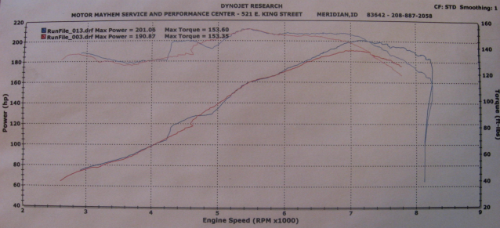
        201 Whp H22a with bolt ons, see the progress from stock f22a to now HERE

        Comment


          #49
          Better explination of car tires and friction

          Sorry for the double post but i found this site after the one that had all the math.
          Friciton and surface area Car explenation

          201 Whp H22a with bolt ons, see the progress from stock f22a to now HERE

          Comment


            #50
            Originally posted by Ghetto_CB7
            (note that this is what makes sense to me having done some physics if anyone knows of another reason or has corrections to make about what i said please let me know. I don't want to mislead!!!)
            Thank you!

            Yes race car drivers do want maximum surface area, but for a different reason. Race cars use slicks with a very soft form of rubber (i think its still rubber but it could be something different but similar) The friction of the tires is not changed by the surface area but by the type of rubber. When they heat up their tires they become sticky (duh ) and the rubber actually sticks to the pavement. This is why they have to change there tires every run or so (drag) or every few laps (nascar). In cars wide tires are used instead of skinny ones to evenly distribute weight of a car, and to ensure you have a maximum ratio of rubber/road. For instance if you hit a patch of rocks on a skinny tire the chance of rubber/rock is higher then if it was a wide tire.

            Here is a physics site that explains it better then me i am sure
            surface area independent of friction explanation
            This is all true, however, a road is not completely flat, therefore having a wider tire will increase the likely hood of gaining traction by way of friction. In an ideal condition, i.e.- perfectly flat road/tire, you're right, the sizes wouldn't matter. On a normal road, the wider tire will create more friction, due to the larger surface area able to contact the road.

            Again, this is why cyclists use thin tires. They want the least amount of friction.

            Comment


              #51
              So wait if you have thinner tires and you have two cars with the same horsepower, same everything but the variable is thicker or thinner tires, the car with thinner tires will win because it took just that much less effort to move it at the start?
              No longer have a cb7.

              V6 POOOWAAAA

              lol, a buick.

              Comment


                #52
                5.8L V8, i'm getting 12 city and 17 hwy.


                Comment


                  #53
                  I am averaging 25-26 city and 27-29 hwy. H22 Auto. Best mileage so far 450 on 15.5 gallons.
                  93 SE Coupe

                  Comment


                    #54
                    Surface Area is independent of Friction!!!

                    Once again there is no connection between friction and surface area, if you don't believe me read the two links i posted earlier. If you still don't believe me buy a physics book and look it up. The second link explains why wider tires help on cars. I know it sounds wrong but thats the way the physics works.

                    201 Whp H22a with bolt ons, see the progress from stock f22a to now HERE

                    Comment


                      #55
                      i've done 675km [422 miles] for the full tank. of course it was 90 hwy/10city.

                      Comment


                        #56
                        Friciton (road/tire) Good and Drag bad

                        Originally posted by 407accord
                        So wait if you have thinner tires and you have two cars with the same horsepower, same everything but the variable is thicker or thinner tires, the car with thinner tires will win because it took just that much less effort to move it at the start?
                        Sorry for the double post.

                        Friction is the force that allows you to accelerate from rest in a car. With less friction you would not be able to accelerate as fast (spin your tires). At higher speeds road on tire friction is nearly negligible compared to drag from air resistance. The reason for this is that drag increases exponentially with velocity . If you want the actual formula i can find it for you. But again believe me surface area and friction are independent. (though this is true in real world experiments less surface area actually increases kinetic friction) As for the narrow tires in bikes from my understanding most of that is for reducing drag and mass on the bike. (it might not seem like much but rotational weight adds up in a hurry, this is why people remove the harmonic balancer on engines and use light weight pullies)

                        201 Whp H22a with bolt ons, see the progress from stock f22a to now HERE

                        Comment


                          #57
                          Originally posted by Ghetto_CB7
                          Once again there is no connection between friction and surface area, if you don't believe me read the two links i posted earlier. If you still don't believe me buy a physics book and look it up. The second link explains why wider tires help on cars. I know it sounds wrong but thats the way the physics works.

                          Straight from the link you referenced:

                          "Even with steamrollers to flatten the asphalt, the surface is still somewhat irregular, especially over the with of a tire. Drag racers can therefore increase the probability or likelihood of making contact with the road by using a wider tire. In addition a secondary benefit is that the wider tire increased the support base and makes it hard to turn the car over in a turn or in a mishap."

                          EDIT: A few links to peruse.

                          http://en.wikipedia.org/wiki/Traction_%28engineering%29

                          "A common approximation is F=μFN. Here, μ summarizes material properties and roughness and is called "the coefficient of friction". FN is the normal force, which is applied perpendicular to the contact. In a simple system in equilibrium, such as a mass sitting on a surface, the normal force is equal to mass multiplied by gravitational acceleration (FN = mg). The statement of this expression is that friction is directly proportional to the intrinsic friction caused by the materials and contaminants; and that friction is also directly proportional to the force. In practice, this is an approximation but in many situations other factors, e.g., the area of contact, play a role."


                          "It is important due to broad application to point out the specific case of multi-wheeled vehicles or vehicles with multiple contact patches between the tyre and the road surface. The constant coefficient of friction approximation is not adequate to describe real world maximum traction situations. If the normal force is increased, per given area of contact patch, the coefficient of friction decreases and as the normal force decreases, the coefficient of friction increases. If this were not true, then increasing tyre width, lowering tyre air pressure or increasing tyre diameter (all of which increase the area of the contact patch) would have little effect."

                          http://www.school-for-champions.com/...ionrolling.htm

                          "Rolling friction is not as straightforward as sliding friction. But still, there is a relationship between the rolling friction and the normal force, similar to that in sliding friction. Often the coefficient of rolling friction is determined by assuming a form of the Standard Friction Equation holds:

                          FR = μR*W"

                          "The coefficient of rolling friction, μR, isn't a simple number as in the case of sliding friction for hard materials. Instead, it is proportional to the width of the wheel and inversely proportional to the radius. In the case of soft wheels and tires, μR the surface area of the tire on the ground is a factor."

                          Another cool link.

                          http://www.newton.dep.anl.gov/newton...ysics/PHY2.HTM

                          Again, I'm not disputing the theory you state, just its direct application to tires.
                          Last edited by PalmShaun55; 06-27-2007, 12:49 PM.

                          Comment


                            #58
                            Originally posted by 407accord
                            So wait if you have thinner tires and you have two cars with the same horsepower, same everything but the variable is thicker or thinner tires, the car with thinner tires will win because it took just that much less effort to move it at the start?
                            I think the logic is you go only as wide as you need to in order perfectly compromise initial grip and overall speed. Go too far in either direction and you won't be maximizing performance.

                            Comment


                              #59
                              Theory is basicly fact in science

                              Most of what you say is true
                              (regarding the first quote) - wider tire increase the likely hood that you will have tire/road friction not tyre/something else friction. This does not increase friction, only the chance that the friction you are experiencing is tire/road.

                              (wikipedia) The person who wrote the first quote for for wikipedia is wrong! Read the quote "as the normal force decreases, the coefficient of friction increases." This goes against everything both of us have agreed with. Normal force is mass*gravity (on a horizontal surface) this guy says that if you reduce mass or gravity you gain friction???? I believe we should both work on writing up a conclusion to this and replace the current wikipedia entry as it is completely wrong!!

                              (Regarding the rolling friction) Yes rolling friction is different!!! and does include the width of the tire!!!. (ok I know what we are having issues over here) the friction for takeoffs (ie max acceleration) is not based on rolling friction but static friction. For mpg yes this is an issue!!!, however at higher speeds this resistance is minute compared to drag. (i am happy we both agree on this and i see what you were talking about with wider tires, i was regarding max static friction as what was being debated not rolling(drag racing, reducing tire pressure and so on), this was stupid of me in a mpg thread. Again though at higher speeds drag greatly outdoes the coefficient of rolling friction and i would say that wider tires would have very little effect on mpg)

                              Math (rolling friction (.035*(.295*.152))*9.8*1100Kg = 16.9N This is 11" tire with a footprint of 11"*6"

                              (.035*(.245*.152))*9.8*1100Kg = 14.1 N This is 9" tire with a footprint of 9"*6"

                              This reduces friction by only 2.87N

                              Drag = .5(1.293)(15.6^2)(.79)= 124.3N at 35 mi/h
                              Drag = .5(1.293)(13.3^2)(.79)= 90.3N at 30 mi/h

                              Difference of 32N, if you want to save gas go 5 mi/h slower.

                              I did this sort of fast so if you find math errors let me know i got most of my coefficients off of wikipedia.
                              http://en.wikipedia.org/wiki/Drag_coefficient

                              201 Whp H22a with bolt ons, see the progress from stock f22a to now HERE

                              Comment


                                #60
                                Originally posted by Ghetto_CB7
                                Most of what you say is true
                                (regarding the first quote) - wider tire increase the likely hood that you will have tire/road friction not tyre/something else friction. This does not increase friction, only the chance that the friction you are experiencing is tire/road.

                                (wikipedia) The person who wrote the first quote for for wikipedia is wrong! Read the quote "as the normal force decreases, the coefficient of friction increases." This goes against everything both of us have agreed with. Normal force is mass*gravity (on a horizontal surface) this guy says that if you reduce mass or gravity you gain friction???? I believe we should both work on writing up a conclusion to this and replace the current wikipedia entry as it is completely wrong!!

                                (Regarding the rolling friction) Yes rolling friction is different!!! and does include the width of the tire!!!. (ok I know what we are having issues over here) the friction for takeoffs (ie max acceleration) is not based on rolling friction but static friction. For mpg yes this is an issue!!!, however at higher speeds this resistance is minute compared to drag. (i am happy we both agree on this and i see what you were talking about with wider tires, i was regarding max static friction as what was being debated not rolling(drag racing, reducing tire pressure and so on), this was stupid of me in a mpg thread. Again though at higher speeds drag greatly outdoes the coefficient of rolling friction and i would say that wider tires would have very little effect on mpg)

                                Math (rolling friction (.035*(.295*.152))*9.8*1100Kg = 16.9N This is 11" tire with a footprint of 11"*6"

                                (.035*(.245*.152))*9.8*1100Kg = 14.1 N This is 9" tire with a footprint of 9"*6"

                                This reduces friction by only 2.87N

                                Drag = .5(1.293)(15.6^2)(.79)= 124.3N at 35 mi/h
                                Drag = .5(1.293)(13.3^2)(.79)= 90.3N at 30 mi/h

                                Difference of 32N, if you want to save gas go 5 mi/h slower.

                                I did this sort of fast so if you find math errors let me know i got most of my coefficients off of wikipedia.
                                http://en.wikipedia.org/wiki/Drag_coefficient


                                Cheers my friend.

                                Comment

                                Working...
                                X