

I have seen numerous people asking about code 43 over and over again and wanted to do a write up on the process of diagnosing it, so hopefully people can fix it without having to post the same thing over and over again.
(FYI, these tests can also be used for codes 1 and 41 if you are trying to find a problem)
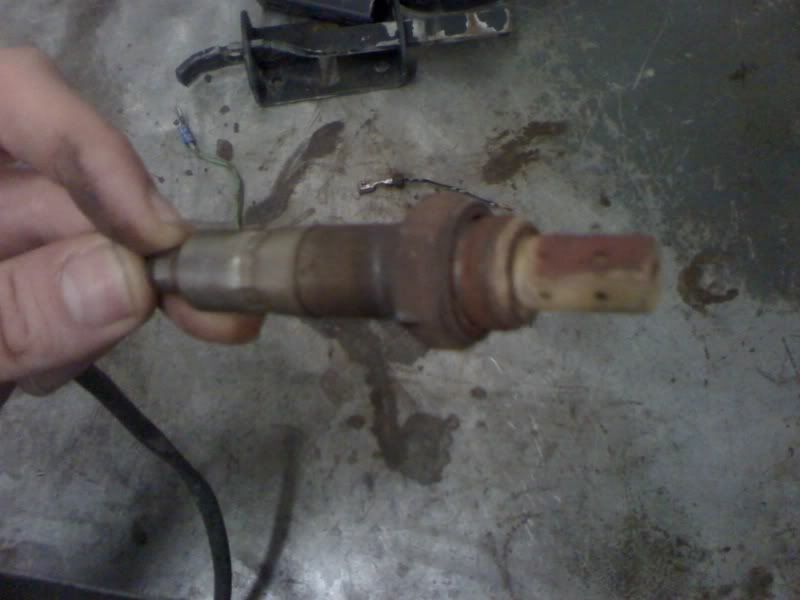
First thing, if you are using a Bosch O2 sensor, or an original 20+ year old sensor, this is probably your problem right off the bat. I will recommend getting a NGK or Denso and seeing if that fixes your problem. The problem with the Bosch O2 is that it is generic and made for EVERYTHING not including the fact that it has a resistance in the O2 sensor at only 4 ohms. Our O2 circuit requires 10-40ohms of resistance, so the Bosch is not adequate and will often be the cause of your problem (Do not get me wrong, some do work well enough not to throw a code, but generally this will be your problem.)
Now if you are using a NGK or Denso O2 sensor, there are a couple checks you can do before replacing your O2 sensor.
Check#1a- Run your car up to normal operating temp. (Cooling fan comes on) Unplug your O2 sensor; you need to check the ohm resistance between terminal A and B. They should be between 15ohm and 20 ohm. If they are not, replace O2 Sensor. (If you check it when it is cold, it should be between 10-40ohm, but better to check when it is warm)
Check #1b (From Cloudasc) - He was having intermediate problems where his car would sputter/bog down and he could push it to WOT and come out of it with the car operating fine. In his case, he unplugged the O2 all together and drove without the O2 plugged in. That is how he could tell it was his O2.
Check #2 –
- You need to access your ECU. (If you do not know how to find it, use the search button above.. I bet you can find it.) Now you want to measure the voltage between terminals D14 (+) and A26 (-). Set your volt meter on the 2V setting. Once you have your test prongs/wires on those terminals (while they are still plugged into the ECU, so best to get a paper clip to shove into them, and then connect your meter to the paperclips) turn the key to the ON position. You should read .4-.5v then it will decrease to about .1v in less than 2 minutes.
- Both of the next steps require you to remove the plug at the O2 sensor.
2a.) If the ECU test has the .1v, Measure the Volts again at D14 and A26 after removing the O2 plug. If there is above .1v, replace the O2 sensor. If it is not above .1v, disconnect the main plugs at the shock tower and test volts again. If there is above .1v, replace the white wire from D14 to O2 sensor plug. If there is not enough volts, replace the ECU with a good known working ECU and test again.
2b.) If the ECU test has < .1v you will test the O2 sensor plug on the engine harness side. While the key is turned on, test the volts between C (-) and D (+). If the Volts are above .1v, replace O2 sensor, if the Volts are below .1v, replace white O2 sensor wire between D14 and O2 sensor plug.


I realize most of the walk through ends in replacing your O2, but you may have a bad ECU or your old wire harness has a bad wire.
Now if this does not fix your problem. This is a good time to go ahead and start diagnosing your fuel related problems. AKA, fuel filter, FPR, Injectors, Injector resistors, and lastly your Fuel Pump (I MEAN LAST!!) I am a big fan of checking your fuel pressure before moving forward with any fuel related problems since it should be between 33-40psi.
(FYI, these tests can also be used for codes 1 and 41 if you are trying to find a problem)
First thing, if you are using a Bosch O2 sensor, or an original 20+ year old sensor, this is probably your problem right off the bat. I will recommend getting a NGK or Denso and seeing if that fixes your problem. The problem with the Bosch O2 is that it is generic and made for EVERYTHING not including the fact that it has a resistance in the O2 sensor at only 4 ohms. Our O2 circuit requires 10-40ohms of resistance, so the Bosch is not adequate and will often be the cause of your problem (Do not get me wrong, some do work well enough not to throw a code, but generally this will be your problem.)
Now if you are using a NGK or Denso O2 sensor, there are a couple checks you can do before replacing your O2 sensor.
Check#1a- Run your car up to normal operating temp. (Cooling fan comes on) Unplug your O2 sensor; you need to check the ohm resistance between terminal A and B. They should be between 15ohm and 20 ohm. If they are not, replace O2 Sensor. (If you check it when it is cold, it should be between 10-40ohm, but better to check when it is warm)
Check #1b (From Cloudasc) - He was having intermediate problems where his car would sputter/bog down and he could push it to WOT and come out of it with the car operating fine. In his case, he unplugged the O2 all together and drove without the O2 plugged in. That is how he could tell it was his O2.
Check #2 –
- You need to access your ECU. (If you do not know how to find it, use the search button above.. I bet you can find it.) Now you want to measure the voltage between terminals D14 (+) and A26 (-). Set your volt meter on the 2V setting. Once you have your test prongs/wires on those terminals (while they are still plugged into the ECU, so best to get a paper clip to shove into them, and then connect your meter to the paperclips) turn the key to the ON position. You should read .4-.5v then it will decrease to about .1v in less than 2 minutes.
- Both of the next steps require you to remove the plug at the O2 sensor.
2a.) If the ECU test has the .1v, Measure the Volts again at D14 and A26 after removing the O2 plug. If there is above .1v, replace the O2 sensor. If it is not above .1v, disconnect the main plugs at the shock tower and test volts again. If there is above .1v, replace the white wire from D14 to O2 sensor plug. If there is not enough volts, replace the ECU with a good known working ECU and test again.
2b.) If the ECU test has < .1v you will test the O2 sensor plug on the engine harness side. While the key is turned on, test the volts between C (-) and D (+). If the Volts are above .1v, replace O2 sensor, if the Volts are below .1v, replace white O2 sensor wire between D14 and O2 sensor plug.
I realize most of the walk through ends in replacing your O2, but you may have a bad ECU or your old wire harness has a bad wire.
Now if this does not fix your problem. This is a good time to go ahead and start diagnosing your fuel related problems. AKA, fuel filter, FPR, Injectors, Injector resistors, and lastly your Fuel Pump (I MEAN LAST!!) I am a big fan of checking your fuel pressure before moving forward with any fuel related problems since it should be between 33-40psi.
 )
)


 .
.
Comment