

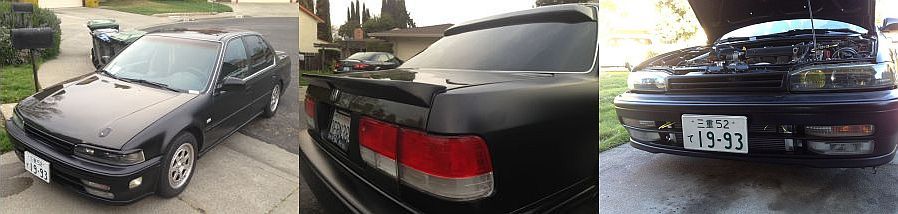
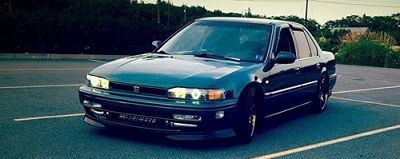
Ok my secret is finally out but here is whats been cooking so far with my CB7.
I've finally located a N.O.S Jackson Racing Supercharger and my future plans is to be the first compound setup CB7. The supercharger will be arriving sometime next week and I can't wait! Some of you may be scratching your heads and wondering WHY? Well why the hell not?! I know I can make ample power alone just running the supercharger or a turbo setup alone but I'm at the point with my CB7 where it's going to end up possibly being just a weekend racer only and I plan on getting a new car for comfort reasons.
My original plan was to just turbocharge my H22a but i've always dreamed the idea of having the best of both worlds. My plan now is to combine this JRSC kit with a turbo to be the first CB running two forms of forced induction. Crazy plans I know but it's time to step it up a little.
I figure i'll play with my current H22a with the stock pulleys for awhile and if it "grenades" oh well. That will give me a reason to put my fully built turbo H22a in. With the compression ratio I have going for it, the bottom end wont give me much power to benefit from the supercharger alone to be "fun" so I'll just take advantage of the higher compression JDM motor to give the compressor some more HP to play with. I will be however utilizing just the built head once the supercharger goes but I'll save the bottom end for it's twincharge future.
The Canadian supercharged H23 CB7 inspired me to buy the kit. I know there will be some minor obstacles to overcome however I want to get these things documented so that everyone has something to go by for a JRSC kit in a CB7.
This will squash the myths and possibly lead to more members going the JRSC route as a form of supercharging any H-series or quite possibly the F22. Once the supercharger arrives, I'll see if I can borrow a F-series manifold to knock one unanswered question about it bolting up and whether or not if the clearance and height is roughly the same.
When I wasn't in a market for the JRSC, I've seen used H22 kits go for just a little over 1k used. Rotrex and other superchargers are far better technology now but I wanted a more simpler semi bolt-in solution.
This is what I have in mind but not as crazy.
http://www.youtube.com/watch?v=3moKulpctN0
The main issue i'm worried about is heatsoak since this is by far the biggest issue with these superchargers. I'm entertaining the idea of running water injection or finding a shop besides LHT to make a aftercooler. I know EDYN has experience porting these things and may be able to help me out.
The video I posted above has me wondering where his charge piping is going? I was planning on running the charge pipes in the "usual areas" where the intercooler would be inline and help cool the turbo.
Is there any reason why his charge pipes are going under the supercharger or is there something that i'm missing that makes it so that the charge pipes can't be run in the same turbo fashion when doing the compound setup?
I've finally located a N.O.S Jackson Racing Supercharger and my future plans is to be the first compound setup CB7. The supercharger will be arriving sometime next week and I can't wait! Some of you may be scratching your heads and wondering WHY? Well why the hell not?!
I know I can make ample power alone just running the supercharger or a turbo setup alone but I'm at the point with my CB7 where it's going to end up possibly being just a weekend racer only and I plan on getting a new car for comfort reasons. My original plan was to just turbocharge my H22a but i've always dreamed the idea of having the best of both worlds. My plan now is to combine this JRSC kit with a turbo to be the first CB running two forms of forced induction. Crazy plans I know but it's time to step it up a little.
I figure i'll play with my current H22a with the stock pulleys for awhile and if it "grenades" oh well. That will give me a reason to put my fully built turbo H22a in. With the compression ratio I have going for it, the bottom end wont give me much power to benefit from the supercharger alone to be "fun" so I'll just take advantage of the higher compression JDM motor to give the compressor some more HP to play with. I will be however utilizing just the built head once the supercharger goes but I'll save the bottom end for it's twincharge future.
The Canadian supercharged H23 CB7 inspired me to buy the kit. I know there will be some minor obstacles to overcome however I want to get these things documented so that everyone has something to go by for a JRSC kit in a CB7.
This will squash the myths and possibly lead to more members going the JRSC route as a form of supercharging any H-series or quite possibly the F22. Once the supercharger arrives, I'll see if I can borrow a F-series manifold to knock one unanswered question about it bolting up and whether or not if the clearance and height is roughly the same.
When I wasn't in a market for the JRSC, I've seen used H22 kits go for just a little over 1k used. Rotrex and other superchargers are far better technology now but I wanted a more simpler semi bolt-in solution.
This is what I have in mind but not as crazy.
http://www.youtube.com/watch?v=3moKulpctN0
The main issue i'm worried about is heatsoak since this is by far the biggest issue with these superchargers. I'm entertaining the idea of running water injection or finding a shop besides LHT to make a aftercooler. I know EDYN has experience porting these things and may be able to help me out.
The video I posted above has me wondering where his charge piping is going? I was planning on running the charge pipes in the "usual areas" where the intercooler would be inline and help cool the turbo.
Is there any reason why his charge pipes are going under the supercharger or is there something that i'm missing that makes it so that the charge pipes can't be run in the same turbo fashion when doing the compound setup?

Comment